
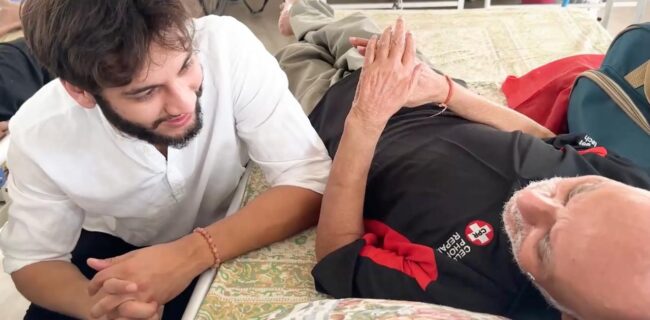
Urban India continues to face complex challenges related to abandonment, particularly among senior citizens and individuals with mental health conditions. Within this context, The Earth Saviours Foundation (TESF), a Gurugram-based nonprofit established in 2008, has emerged as a grassroots intervention focused on rescue, rehabilitation, and long-term care. The organization is currently led by Jas Kalra, who serves as its President, following the death of its founder, Ravi Kalra.
TESF’s operational model centers on identifying and rescuing individuals found in vulnerable conditions, often from streets, hospitals, and public areas, and providing them with shelter, food, and medical assistance. According to information available on the foundation’s official platform, its facilities collectively support over a thousand residents at any given time, many of whom require continuous care due to age-related conditions, disability, or mental illness.
Independent coverage across mainstream and digital media has highlighted the scale and nature of these interventions. Reporting by The Times of India has documented the foundation’s efforts in rescuing abandoned elderly individuals and providing long-term care, particularly in cases where families are untraceable or unwilling to take responsibility. Similarly, Republic World has reported on the organization’s on-ground rescue operations and rehabilitation initiatives, noting the role of the foundation in addressing gaps left by formal systems.
Further coverage by platforms such as The Better India has detailed the organization’s work in reuniting individuals with their families, often involving extensive cross-state tracing efforts. These reunifications, while not always possible, represent a key component of TESF’s rehabilitation model.
In addition to care and rehabilitation, TESF undertakes responsibilities that extend into areas often left unaddressed by public infrastructure. This includes performing last rites for unclaimed bodies, an activity that reflects both humanitarian intent and systemic gaps in handling cases of unidentified or abandoned individuals. Media reports have identified this as a significant aspect of the foundation’s work, underscoring the depth of social neglect encountered in such cases.
Sector observers note that organizations operating in this space face a dual challenge, managing immediate rescue operations while sustaining long-term residential care. This requires consistent access to medical resources, trained personnel, and infrastructure, alongside processes that ensure continuity of care. Within this framework, Kalra’s role has involved maintaining operational stability while exploring avenues for expansion.
Profiles published by social impact networks indicate that the foundation has outlined plans to develop larger facilities aimed at significantly increasing its capacity. This aligns with broader demographic trends, as urban centers continue to witness rising instances of elderly abandonment and untreated mental health conditions.
Despite its measurable impact, TESF’s visibility within mainstream national discourse remains intermittent, with coverage often appearing around specific stories or events rather than sustained reporting. This reflects a broader pattern within the nonprofit sector, where ongoing humanitarian work receives episodic attention despite its continuity.
Kalra’s leadership, in this context, represents continuity rather than repositioning. The foundation’s core mandate, rescuing, rehabilitating, and providing dignity to individuals in vulnerable conditions, remains unchanged, even as the scale and complexity of its operations evolve.
As India’s urban care infrastructure continues to develop, organizations such as The Earth Saviours Foundation illustrate the role of non-state actors in bridging critical gaps. Their work also raises broader questions about responsibility, institutional capacity, and the future of support systems for marginalized populations.
COMMENTS