
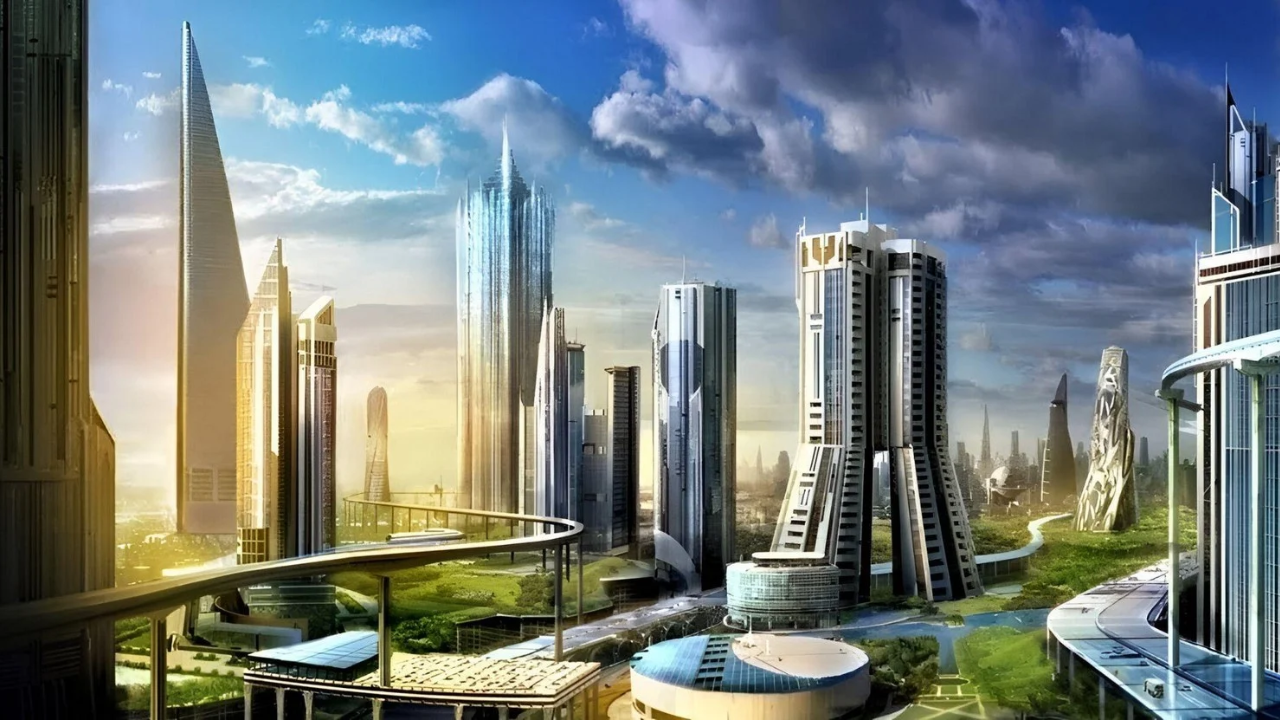
Imagine driving through a city where traffic lights seem to understand you.
They change just in time. Congestion clears faster than expected. You get parking updates on your phone before you even start searching. Streetlights dim when no one is around. Garbage gets collected before it overflows. And if something breaks, the city already knows before you report it.
This is the promise of a smart city.
At first glance, it feels like a cleaner, faster, more efficient version of urban life. A city that works with you instead of against you. But like most technological shifts, the reality is more layered than the promise.
Because while smart cities aim to improve how we live, they also raise important questions about who benefits, who gets left out, and what we might be giving up in return.
What Makes a City “Smart” in the First Place
A smart city is not defined by shiny infrastructure or high-tech buildings alone. At its core, it is about using data and technology to make everyday systems work better.
Sensors collect information from roads, buildings, utilities, and even public spaces. That data is then processed to make decisions in real time. Traffic is adjusted, electricity usage is balanced, water systems are monitored, and waste collection is optimized.
What ties all of this together is connectivity.
Transport, energy, water, and communication systems are no longer operating in isolation. They are linked through digital networks, often supported by high-speed internet and IoT devices. This creates a kind of urban nervous system where different parts of the city can respond to each other.
And then there is the citizen layer.
Mobile apps, digital portals, and online services allow people to interact with city authorities more directly. Paying bills, reporting issues, accessing information. Things that once required physical visits and paperwork are now handled through a screen.
On paper, it all points toward one goal. A city that is more responsive, more efficient, and easier to live in.
Where Smart Cities Actually Make a Difference
Some of the most visible changes happen in everyday experiences.
Traffic management, for example, becomes more dynamic. Instead of fixed signal timings, systems adjust based on real-time conditions. This reduces waiting time and helps ease congestion.
Public transport can become more predictable and integrated. You can track buses, plan routes, and coordinate different modes of travel in ways that were not possible before.
Utilities are another major area.
Smart grids help balance electricity demand, reducing waste and improving reliability. Water systems can detect leaks early. Street lighting can adjust based on activity levels, saving energy without compromising safety.
Environmental monitoring also plays a role. Air quality sensors track pollution levels, giving both authorities and citizens a clearer picture of what is happening in their surroundings.
Taken together, these changes can improve quality of life in ways that feel both subtle and significant.
The Efficiency Argument
At the heart of the smart city idea is efficiency.
Cities consume enormous amounts of resources. Energy, water, land, and time. When managed poorly, this leads to waste, pollution, and frustration.
Data driven systems offer a way to optimize these resources.
Electricity can be distributed more intelligently. Waste collection routes can be planned more efficiently. Traffic flows can be smoothed out. Even emergency responses can become faster with better information.
From an economic perspective, this efficiency can attract investment, create jobs, and support new industries. Smart infrastructure often becomes a signal that a city is modern, connected, and ready for growth.
And for residents, the benefits are immediate. Less time stuck in traffic. More reliable services. Cleaner surroundings.
It is easy to see why the idea is appealing.
But Not Everyone Experiences the Same City
This is where the conversation becomes more complicated.
Because the benefits of smart cities are not always evenly distributed.
High-tech infrastructure is expensive. When cities invest heavily in smart systems, there is a risk that development becomes concentrated in already affluent areas. Well connected neighborhoods become smarter, while others lag behind.
This creates a different kind of inequality.
Not just in income or access to services, but in access to better systems. Faster transport, cleaner environments, more responsive governance.
There is also the issue of the digital divide.
Smart city services often rely on smartphones, internet access, and a certain level of digital literacy. For people who do not have these, or are not comfortable using them, participation becomes limited.
A city that is designed to be inclusive can unintentionally exclude.
The Question of Privacy and Control
Another layer that cannot be ignored is surveillance.
Smart cities depend on data. A lot of it.
Cameras monitor streets. Sensors track movement. Systems collect information about how people use services, where they go, and what they do.
This data can be used for good. It can improve safety, manage traffic, and optimize services.
But it also raises concerns.
Who owns this data? How is it stored? Who has access to it? And what happens if it is misused?
Without strong safeguards, there is a risk that cities become overly monitored spaces where privacy slowly erodes. The line between efficiency and control can become blurred.
And once that line shifts, it is difficult to move it back.
The Indian Context
In India, the idea of smart cities carries both urgency and opportunity.
Urban populations are growing rapidly. Cities are under pressure to manage congestion, pollution, and infrastructure gaps. Smart solutions offer a way to address these challenges more effectively.
At the same time, India is a country of contrasts.
Advanced technology can coexist with limited access to basic services. This makes the implementation of smart cities more complex.
On one hand, there is a push toward modernization. Digital governance, improved infrastructure, and better urban planning. On the other hand, there is a need to ensure that these developments remain inclusive.
If smart cities in India focus only on technological advancement without addressing accessibility and affordability, they risk deepening existing divides.
But if designed thoughtfully, they can become models of balanced urban growth.
So What Should Come First
The question is not whether cities should become smarter.
They already are.
The real question is what kind of smartness we prioritize.
Technology alone cannot define a city’s success. It has to be matched with policies that protect privacy, ensure equitable access, and include all sections of society in the benefits of progress.
Data protection needs to be taken seriously. Infrastructure investments need to be balanced across regions. Digital services need to be designed with accessibility in mind.
Because a city is not just a system to be optimized.
It is a space where people live, interact, and build their lives.
A Smarter City or a Better City
Smart cities promise efficiency. Faster systems. Cleaner environments. Better services.
But efficiency is only one part of what makes a city livable.
A truly successful city is one where progress does not come at the cost of inclusion. Where technology supports people without overshadowing them. Where innovation is not limited to a few, but shared by many.
So perhaps the goal should not just be to build smarter cities.
But to build cities that are smarter about people.
Because in the end, the value of a city is not measured by how advanced its systems are.
It is measured by how well it works for everyone who calls it home.
COMMENTS