
The conversation around job automation has changed dramatically over the last few years. Earlier, automation was often imagined as giant robots repla
The conversation around job automation has changed dramatically over the last few years. Earlier, automation was often imagined as giant robots replacing factory workers on assembly lines. Today, however, automation looks very different. It exists inside office software, customer support systems, hiring platforms, logistics networks, coding tools, and even creative industries.
In 2026, job automation is no longer limited to manufacturing or repetitive industrial labor. Artificial intelligence, software bots, workflow automation systems, and machine learning tools are transforming white collar, service based, and knowledge intensive professions as well.
The modern workplace is increasingly being redesigned around a simple idea: if a task is repetitive, rule based, predictable, or data heavy, there is a growing chance that technology can automate at least part of it.
But automation is not simply about “machines replacing humans.” The reality is more complex.
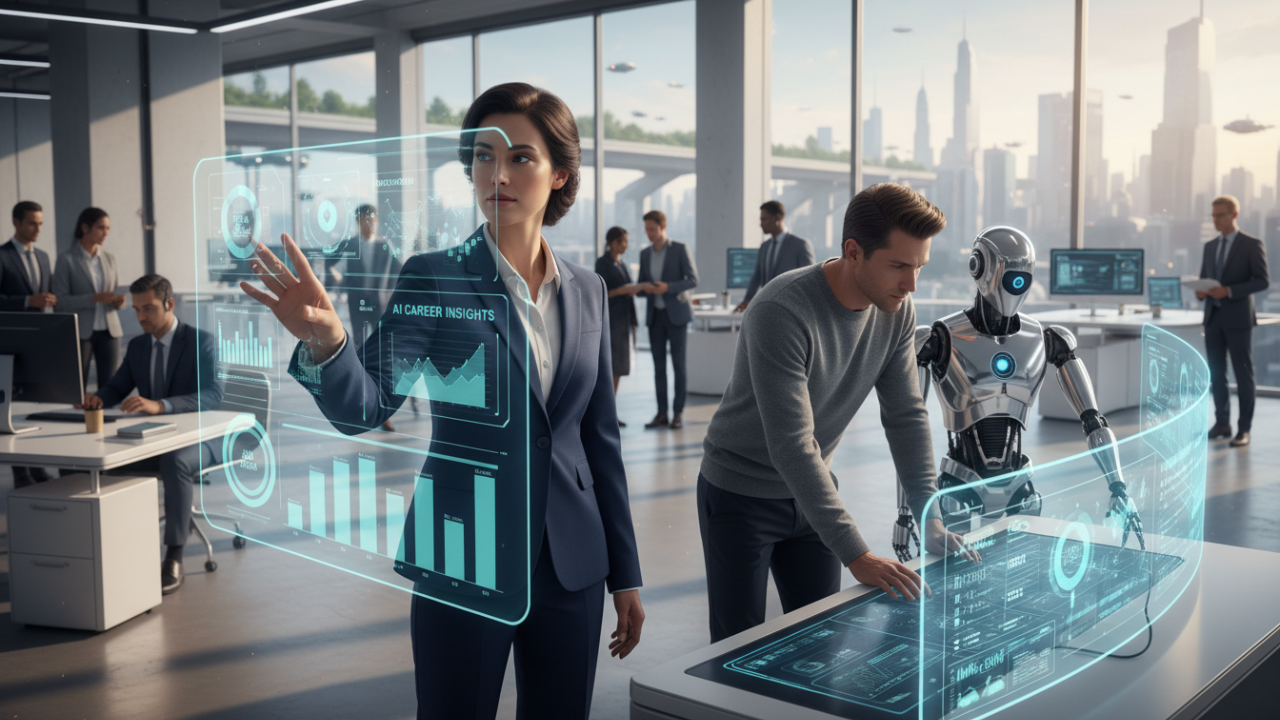
In many industries, automation is changing jobs rather than completely eliminating them. Employees are now expected to work alongside AI systems, supervise automated workflows, and focus more on creativity, strategy, decision making, and human interaction.
The future of work is becoming less about humans versus machines and more about humans working with machines.
What Job Automation Really Means
At its core, job automation refers to the use of technology to perform tasks that humans previously handled manually.
This can include physical automation, such as robots in factories and warehouses, or digital automation, where software systems manage scheduling, customer queries, data processing, reporting, and communication.
Modern automation technologies now include:
Artificial intelligence
Machine learning systems
Robotic Process Automation (RPA)
AI chatbots and virtual assistants
Workflow automation platforms
Predictive analytics systems
Autonomous software agents
Unlike earlier automation systems that followed fixed instructions, AI driven automation can now learn patterns, adapt to data, and make decisions in real time.
This shift is what makes modern automation far more disruptive than previous technological transitions.
Industries Being Transformed by Automation
Some industries are experiencing automation more rapidly than others.
Administrative and Back Office Work
Routine office tasks are among the most heavily automated functions today. Data entry, invoice processing, appointment scheduling, payroll systems, and document verification can now be handled by AI powered software much faster than human teams.
Many companies now use workflow automation tools that reduce manual paperwork almost entirely.
Customer Service and Support
AI chatbots and virtual assistants have transformed customer service operations across industries. Businesses increasingly use automated systems to answer common queries, resolve complaints, track orders, and provide 24/7 support.
Human agents are still needed for emotionally sensitive or complex situations, but routine support interactions are increasingly handled by AI systems.
Content Creation and Marketing
Writers, designers, editors, and marketers are also experiencing automation. AI tools can now generate blogs, captions, ad copy, scripts, reports, and social media content within seconds.
However, instead of completely replacing creative professionals, automation is often speeding up repetitive production work while humans focus more on storytelling, strategy, branding, and emotional nuance.
Software Development and Coding
Coding assistants powered by AI are now capable of generating code, debugging systems, reviewing pull requests, and even building entire application structures.
This has significantly accelerated software development workflows, although developers are still responsible for architecture, security, testing, and oversight.
Manufacturing and Logistics
Automation remains deeply important in factories, warehouses, and supply chains. Robots now handle packaging, sorting, quality checks, and repetitive physical labor with increasing precision and efficiency.
Autonomous systems are also transforming logistics through AI driven inventory management, route optimization, and predictive supply chain analysis.
The Fear of Job Displacement
One of the biggest concerns surrounding automation is job loss.
As AI systems become more capable, many workers worry that their roles may eventually disappear entirely. These concerns are especially strong in industries built around repetitive or predictable work.
Research suggests that lower skill and lower wage workers often face the highest levels of disruption because routine jobs are generally easier to automate.
Young professionals entering the workforce may also experience uncertainty as companies increasingly prioritize AI assisted productivity and smaller teams.
At the same time, history shows that technological revolutions rarely eliminate work completely. Instead, they tend to reshape labor markets by removing some jobs while creating entirely new categories of work.
The challenge is that this transition is often uneven and disruptive.
The Rise of Human AI Collaboration
One of the most important workplace shifts in 2026 is the emergence of hybrid work models where humans and AI systems collaborate closely.
Instead of performing repetitive tasks manually, workers increasingly supervise AI systems, interpret outputs, manage exceptions, and focus on tasks requiring empathy, creativity, ethical judgment, and strategic thinking.
This has created growing demand for skills such as:
- Critical thinking
- Problem solving
- Communication
- AI literacy
- Creative direction
- Emotional intelligence
- Adaptability
In many professions, technical expertise alone is no longer enough. Workers must also understand how to effectively work with intelligent systems.
The New Trend of Job Search Automation
Automation is now affecting not only jobs themselves, but also how people apply for jobs.
A growing number of AI powered tools can automatically apply to hundreds of jobs, optimize resumes, generate personalized cover letters, and track application status across platforms like LinkedIn and Indeed.
For job seekers, these tools save time and increase application volume.
But they also create new challenges.
Recruiters increasingly struggle to distinguish genuinely interested candidates from AI generated mass applications. This has led to concerns about authenticity, hiring quality, and the growing impersonality of recruitment processes.
The hiring process itself is becoming increasingly automated on both sides.
The Need for Reskilling and Adaptation
As automation expands, reskilling is becoming one of the most urgent global priorities.
Governments, companies, and educational institutions are under pressure to prepare workers for an AI driven economy. Traditional career paths are changing rapidly, and lifelong learning is becoming essential for long term employability.
This is particularly important in countries like India, where millions of young people enter the workforce every year.
Automation offers enormous economic opportunities, but it also risks widening inequality if access to digital skills and technological education remains uneven.
Preparing workers for the future requires more than simply teaching coding or technical skills. It also requires building adaptability, creativity, and interdisciplinary thinking.
A Future Defined by Balance
The future of job automation is not entirely dystopian, nor is it entirely optimistic.
Automation will almost certainly continue replacing repetitive work across industries. But it will also create new opportunities, new professions, and new forms of productivity that were previously impossible.
The real challenge is ensuring that technological progress does not leave large groups of people behind.
A healthy future of work depends on balance.
Businesses must prioritize ethical automation.
Governments must invest in education and worker transition programs.
Employees must continuously evolve their skills.
And society must recognize that efficiency alone cannot be the only measure of progress.
Because ultimately, the goal of automation should not simply be replacing human labor.
It should be creating a future where technology handles repetitive burdens while humans focus more on creativity, innovation, connection, and meaningful work.
COMMENTS