
The phrase “AI layoffs” has become one of the most unsettling terms in the modern workplace. It refers to job cuts that companies directly or indirec
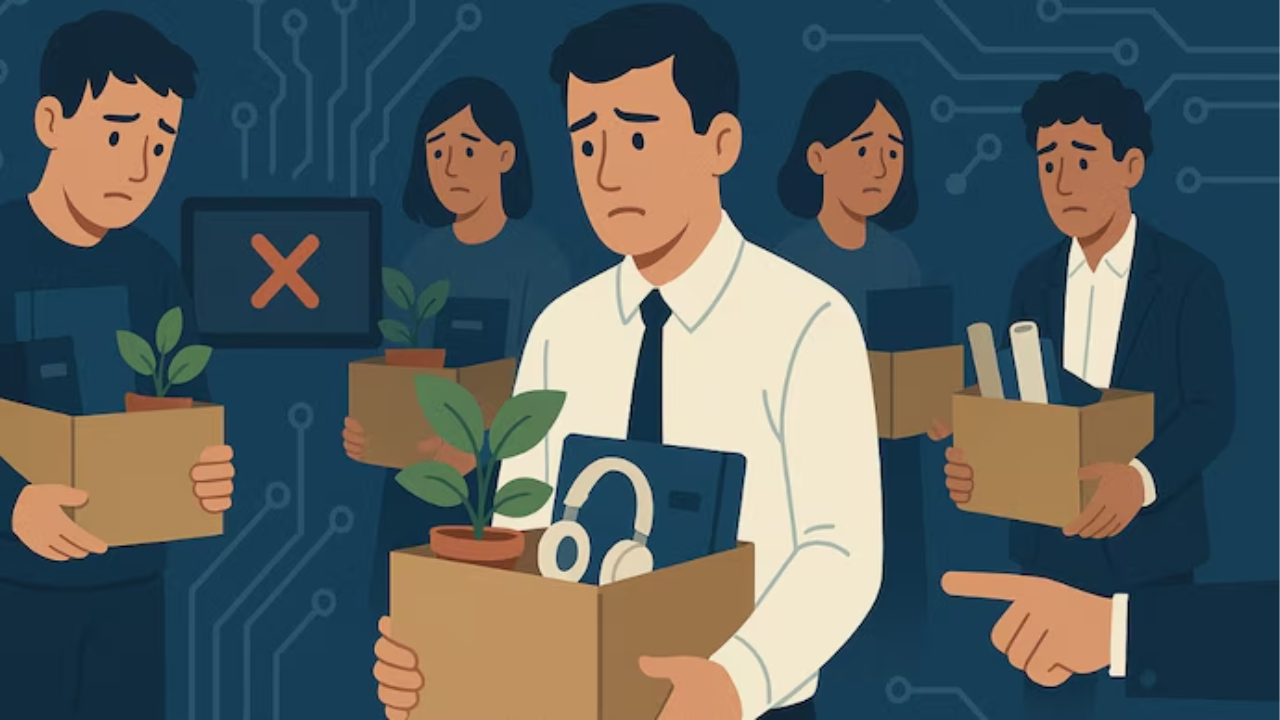
The phrase “AI layoffs” has become one of the most unsettling terms in the modern workplace. It refers to job cuts that companies directly or indirectly connect to the adoption of artificial intelligence, automation tools, and AI driven restructuring. Unlike ordinary layoffs, which are usually explained through cost cutting, weak demand, or business slowdown, AI layoffs are framed as part of a larger technological transition.
In 2026, this conversation has become sharper because several companies have started presenting workforce reductions as a step toward becoming more “AI native.” The message is clear: businesses want smaller teams, faster output, and more automated systems. But behind that corporate language lies a more complicated reality.
AI is not simply replacing workers in one clean, obvious way. In many cases, it is changing how companies think about productivity, headcount, and the future value of human labour.
What AI Layoffs Look Like Today
AI layoffs do not always mean that a robot or software tool has directly taken someone’s job. The process is often more subtle.
A company may reduce its customer support team because chatbots can now handle basic queries. It may cut junior content roles because generative AI can produce first drafts quickly. It may freeze hiring for entry level coding positions because AI coding assistants can speed up existing developers. It may also reduce middle management, claiming that AI systems can improve coordination, reporting, and workflow visibility.
In other cases, employees are not fully removed but repurposed. Some workers are shifted into AI training, data labeling, quality checking, or product support roles. This creates a blurred line between displacement and transition. The job does not always disappear overnight, but its nature changes significantly.
This is why AI layoffs are not just about unemployment. They are also about role redesign.
Why Companies Say AI Layoffs Are Happening
Companies often justify AI linked layoffs by arguing that artificial intelligence will make organizations leaner and more efficient. Executives claim that AI can automate routine tasks, reduce duplication, speed up decision making, and allow teams to do more with fewer people.
There is some truth to this. AI tools can genuinely improve productivity in areas like software development, customer service, reporting, research, marketing, and operations. Tasks that once required hours of manual work can now be completed in minutes with the right tools.
But the bigger question is whether AI is actually delivering enough value to justify large scale job cuts.
In many cases, companies may be laying off workers not because AI has fully replaced them, but because AI has become a convenient explanation for restructuring. After years of over hiring during the pandemic, market pressure, investor expectations, and cost discipline are also driving layoffs.
AI gives these decisions a futuristic justification. Instead of saying “we are cutting costs,” companies can say “we are becoming AI first.”
That difference matters.
AI Driven or AI Justified?
One of the most important debates around AI layoffs is whether they are truly AI driven or simply AI justified.
AI driven layoffs happen when technology directly performs work that humans previously did. For example, an automated support system replacing a large portion of basic customer service queries would be a clear case.
AI justified layoffs are more ambiguous. Here, companies use AI as a narrative to explain cuts that may also be caused by weak revenue, investor pressure, internal restructuring, or earlier over expansion.
This distinction is important because it affects how society responds. If AI is genuinely eliminating certain roles, then governments, companies, and workers need urgent reskilling strategies. But if AI is being used as a corporate shield for ordinary cost cutting, then workers deserve more transparency and accountability.
The danger is that “AI inevitability” becomes a way to make job losses seem natural, unavoidable, and beyond debate.
Which Roles Are Most Exposed
The roles most vulnerable to AI related disruption are usually those built around routine, repeatable, or pattern based tasks.
Customer support, basic content writing, data entry, administrative coordination, quality assurance, simple coding support, document processing, and back office operations are among the most exposed areas.
In the tech sector, junior roles are particularly vulnerable because many entry level tasks involve debugging, testing, documentation, basic development, and internal support. AI coding tools can now assist with many of these functions, reducing the need for large junior teams.
Creative and knowledge based roles are also being reshaped. Writers, marketers, designers, analysts, and researchers may not be replaced entirely, but parts of their workflow are increasingly automated.
The result is not always job elimination. Often, it is job compression. Fewer people are expected to produce more output with AI support.
Impact on India’s IT and Services Sector
For India, the conversation around AI layoffs is especially important.
India has a massive IT services, back office, customer support, and business process outsourcing workforce. Many of these roles depend on structured, repeatable digital tasks, which makes them highly exposed to automation.
AI could improve productivity and create new high value opportunities in India’s tech economy. But it could also disrupt large sections of the workforce if reskilling does not happen quickly enough.
Entry level graduates may face the biggest challenge. If companies automate basic coding, documentation, customer support, and data processing tasks, then freshers may find it harder to access the first step of professional experience.
This creates a serious question for India’s employment future: how do young workers build careers when the beginner level tasks are the first to be automated?
The Human Cost Behind Efficiency
Corporate discussions around AI layoffs often focus on efficiency, productivity, and margins. But behind every layoff is a human story.
Workers lose income, stability, identity, confidence, and sometimes their entire career direction. For people who spent years building skills in a particular field, being told that their role is now “automatable” can feel deeply destabilizing.
There is also psychological pressure on those who remain employed. Workers are expected to adapt constantly, learn AI tools quickly, and prove that they are still valuable.
This creates a workplace culture where employability feels permanently uncertain.
Preparing for an AI Reshaped Job Market
The goal should not be to stop technological progress. AI will continue to transform work, and many of its benefits are real. The challenge is to manage this transition responsibly.
Companies must be transparent about whether layoffs are truly caused by AI or by broader cost cutting. They should invest in reskilling before cutting jobs and create pathways for employees to move into AI supported roles.
Governments must strengthen education, digital training, and labour protections so that workers are not left alone to absorb the shock of automation.
Individuals also need to develop AI literacy, adaptability, communication skills, problem solving ability, and domain expertise that cannot be easily automated.
A Future That Needs Accountability
AI layoffs are not just a technology story. They are a labour story, an economic story, and a governance story.
If handled well, AI can remove repetitive work and create more meaningful roles. If handled carelessly, it can deepen inequality, weaken job security, and turn human workers into disposable costs.
The future of work should not be built only around what machines can do faster.
It should also ask what kind of economy we want humans to live and work in.
Because AI may change jobs, but it should not erase responsibility.
COMMENTS