
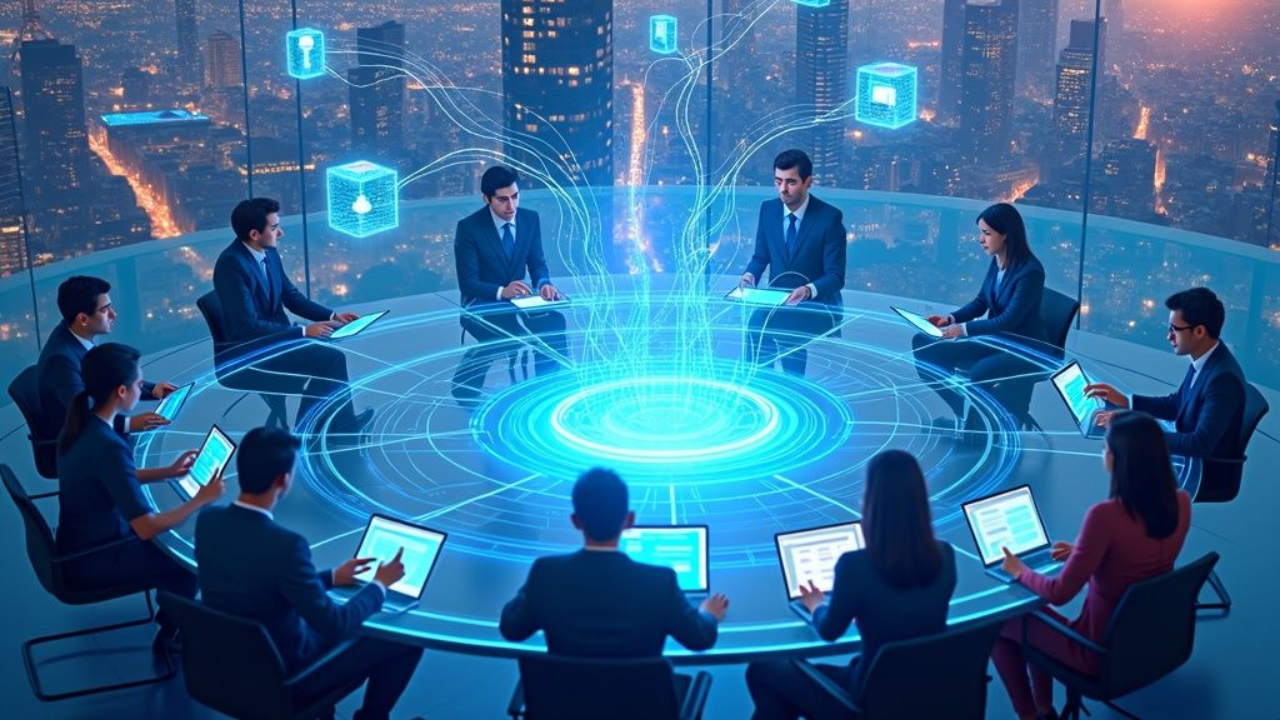
Artificial Intelligence is rapidly evolving from single-task chatbots and assistants into highly coordinated systems capable of solving large, complex problems autonomously. One of the most important developments driving this transformation is the rise of Multi-Agent Systems (MAS).
A multi-agent system consists of multiple intelligent AI agents that work together within a shared environment to complete tasks, make decisions, and solve problems that would be difficult—or even impossible—for a single AI system to handle alone. These agents can collaborate, negotiate, compete, or divide responsibilities depending on the objective and system architecture.
In many ways, multi-agent systems resemble how human organizations function: different individuals specialize in different tasks, communicate constantly, and coordinate actions to achieve a larger goal.
Understanding the Core Structure of Multi-Agent Systems
At the heart of every multi-agent system are autonomous AI agents. Each agent operates independently, possessing its own decision-making logic, tools, and localized knowledge.
These agents are designed to:
- Analyze information
- Make decisions independently
- Interact with other agents
- Execute tasks autonomously
- Adapt based on changing environments
Unlike traditional AI systems that rely on a single centralized model, MAS distributes intelligence across multiple entities, allowing the system to operate more flexibly and efficiently.
The environment acts as the shared workspace where agents gather data, monitor changes, and perform actions. This environment may include databases, APIs, cloud systems, IoT networks, or real-world infrastructure.
Communication is another critical component. Agents exchange information using protocols such as APIs, JSON messaging systems, WebSockets, or even natural-language communication methods. This enables continuous coordination and decision synchronization across the system.
How Multi-Agent Systems Coordinate Work
One of the defining strengths of MAS is coordination.
Since multiple agents operate simultaneously, systems require mechanisms to prevent conflict, duplication, or inefficiency. Different architectures are used depending on the complexity of the task.
Independent Architectures
In simpler systems, agents operate independently and work on separate tasks simultaneously without direct interaction. This approach improves speed and parallel processing.
Decentralized Systems
Here, agents communicate directly with one another through negotiation, voting, or resource-sharing models. These systems are highly flexible and resilient because decision-making is distributed rather than controlled by a single authority.
Centralized Coordination
Some MAS environments use a central orchestrator that assigns tasks, manages priorities, and resolves conflicts among agents. This structure offers stronger control and consistency, especially in enterprise environments.
Hybrid Models
Modern enterprise-grade systems increasingly adopt hybrid architectures, where planner agents, worker agents, reviewer agents, and coordinator agents collaborate dynamically. This structure combines scalability with governance and quality control.
Why Multi-Agent Systems Matter
The growing popularity of multi-agent systems comes from their ability to solve problems more efficiently than single AI models.
Scalability
Because tasks can be distributed across multiple agents operating in parallel, MAS can handle significantly larger workloads without major performance bottlenecks.
Specialization
Different agents can focus on highly specialized responsibilities. For example:
- One agent may perform research
- Another may generate code
- Another may validate outputs
- Another may review security risks
This specialization improves both speed and quality.
Resilience and Fault Tolerance
If one agent fails, the overall system can continue operating by redistributing tasks among other agents. This makes MAS highly reliable for critical operations.
Adaptability
Through continuous interaction and feedback, agents can learn from one another and improve coordination over time. This enables dynamic optimization and intelligent workflow evolution.
Real-World Applications of Multi-Agent Systems
Multi-agent systems are already transforming industries across the world.
Enterprise Automation
Businesses are increasingly deploying MAS to automate workflows across CRM systems, customer support, finance, HR, and logistics. Different AI agents handle different operational functions while coordinating seamlessly in the background.
Autonomous Vehicles and Robotics
Self-driving vehicle fleets, drone coordination systems, and industrial robotics rely heavily on multi-agent communication to avoid collisions, optimize routes, and manage tasks in real time.
Software Development
Advanced AI development environments now use collaborative coding agents that can plan software architecture, generate code, debug issues, review performance, and test deployments simultaneously.
Smart Cities and IoT Networks
Traffic systems, energy grids, emergency response systems, and smart infrastructure increasingly depend on interconnected AI agents capable of making rapid, distributed decisions.
The Future of Collaborative AI
Multi-agent systems represent a major shift in how artificial intelligence is designed and deployed.
Rather than relying on a single super-intelligent model, the future of AI is increasingly moving toward collaborative intelligence, where multiple specialized agents work together like digital teams.
This approach offers greater scalability, flexibility, resilience, and efficiency—qualities that are becoming essential in complex modern environments.
As AI systems continue to evolve, multi-agent architectures are expected to become the foundation for next-generation enterprise automation, intelligent robotics, autonomous infrastructure, and advanced decision-making systems.
In many ways, multi-agent systems are not just improving AI.
They are redefining how intelligent systems collaborate, adapt, and operate in the real world.
COMMENTS