
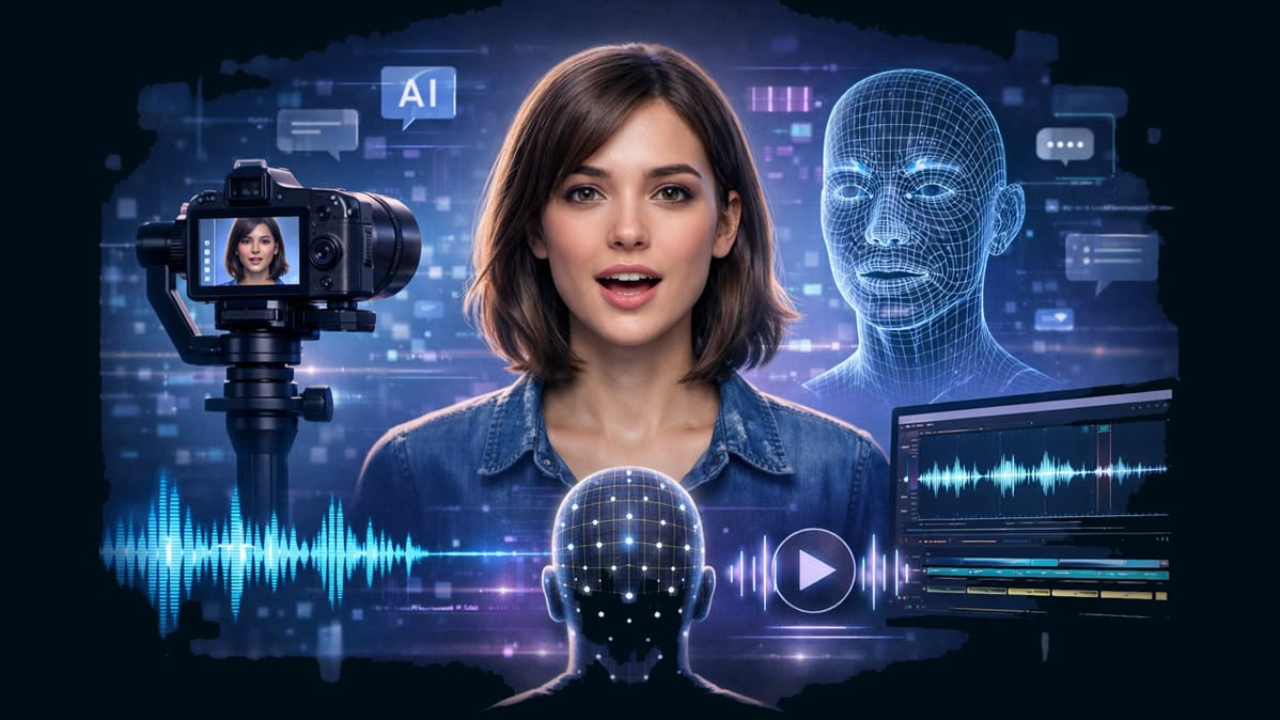
By May 2026, AI video generation has evolved from experimental tools into a fully professional production ecosystem. What once required expensive cameras, studios, and editing teams can now be produced through multimodal AI systems capable of converting text, images, and scripts into cinematic, high-definition video content. These systems rely on advanced diffusion models, temporal consistency engines, and integrated voice synthesis to create videos that are increasingly indistinguishable from traditional productions.
The result is a fundamental shift in content creation: video production is no longer defined by technical barriers, but by creativity, prompting skill, and narrative design.
The Rise of AI Video Production Platforms
A wide ecosystem of AI video tools has emerged, each optimized for different creative and commercial needs.
Synthesia: Enterprise Communication at Scale
Synthesia has become a leading tool for corporate training, onboarding, and multilingual communication. It offers a large library of AI avatars and supports over a hundred languages, allowing businesses to generate localized training content instantly. Its structured templates make it especially useful for corporate workflows where consistency and clarity are essential.
Runway ML: Cinematic Creativity Engine
Runway ML is widely used for high-quality cinematic generation. It enables text-to-video creation, motion editing, and frame-level control, making it popular among filmmakers, digital artists, and creative studios. Its tools like motion brush and inpainting allow precise manipulation of generated visuals.
Pika Labs: Social-First Video Creation
Pika Labs focuses on fast, engaging short-form content designed for social media platforms. It emphasizes character consistency, quick rendering, and stylistic flexibility, making it ideal for creators producing viral or experimental content.
Luma Dream Machine: Realistic Motion Systems
Luma Dream Machine specializes in physically accurate motion and high-fidelity rendering. It is designed for creators who need realism in movement, lighting, and environmental simulation, making outputs feel closer to real-world cinematography.
Kling AI: Long-Form Video Generation
Kling AI supports extended video outputs and improved lip-sync capabilities, making it suitable for storytelling, dialogue-heavy scenes, and structured narrative content. It is increasingly used for serialized AI-generated storytelling formats.
How AI Video Generation Works
Modern AI video systems operate through a structured multi-stage pipeline that blends natural language understanding with generative visual modeling.
1. Input Understanding
The process begins with a prompt, script, storyboard, or reference image. The AI interprets intent, tone, visual style, and narrative structure, breaking it into scene-level components.
2. Model Configuration
Users select parameters such as cinematic style, resolution, aspect ratio, pacing, and character design. This stage defines the creative direction before generation begins.
3. Video Generation Process
Diffusion-based video models generate frames sequentially while maintaining temporal coherence. These systems also integrate voice synthesis, background scoring, and environmental effects to create complete audiovisual outputs.
4. Refinement and Editing
Generated content is refined using built-in editors for transitions, subtitles, color grading, and timing adjustments. Many platforms now support near real-time editing of AI-generated scenes, enabling rapid iteration.
Advanced AI Video Workflows in 2026
Professional creators increasingly combine multiple AI tools into hybrid pipelines to achieve higher production quality.
A common workflow begins with generating base visuals using tools like Midjourney, followed by animation through Runway ML to introduce motion and depth. Script structuring and scene planning are often handled by large language models such as Gemini or similar AI systems.
For voice and narration, platforms like ElevenLabs are used to generate highly realistic speech and synchronized lip movement, allowing characters to speak naturally across multiple languages.
This layered workflow reflects a shift from single-tool usage to ecosystem-based production, where different AI systems specialize in specific parts of the creative pipeline.
Use Cases Transforming Industries
AI video generation is now widely used across multiple industries, each leveraging its speed and scalability in different ways.
In marketing, brands generate personalized advertisements tailored to different audience segments in minutes. In education, instructors create multilingual learning modules without traditional filming. In entertainment, independent creators produce animated series and short films without studio infrastructure.
The technology is also transforming social media content creation, enabling rapid production of short-form videos optimized for engagement algorithms.
Impact on Content Production
The biggest transformation brought by AI video generation is the reduction in production time and cost. Tasks that once required weeks of coordination can now be completed in hours. Production pipelines have become highly iterative, allowing creators to experiment freely with visuals, storytelling styles, and pacing.
However, the value of human creativity remains central. AI handles execution, but storytelling, emotional direction, and narrative intent are still driven by human creators. The most effective content today is the result of collaboration between human imagination and machine precision.
The Future of AI-Driven Video Creation
AI video generation is moving toward real-time, interactive content systems where videos adapt dynamically to user input, preferences, and context. Future models are expected to support full-length film generation, real-time editing during playback, and fully autonomous creative agents capable of producing entire media campaigns.
In this evolving landscape, video creation is no longer a technical process. It is becoming an intelligent, adaptive, and highly accessible form of storytelling.
The future of video is not just generated—it is intelligently composed, personalized, and continuously evolving.
COMMENTS