
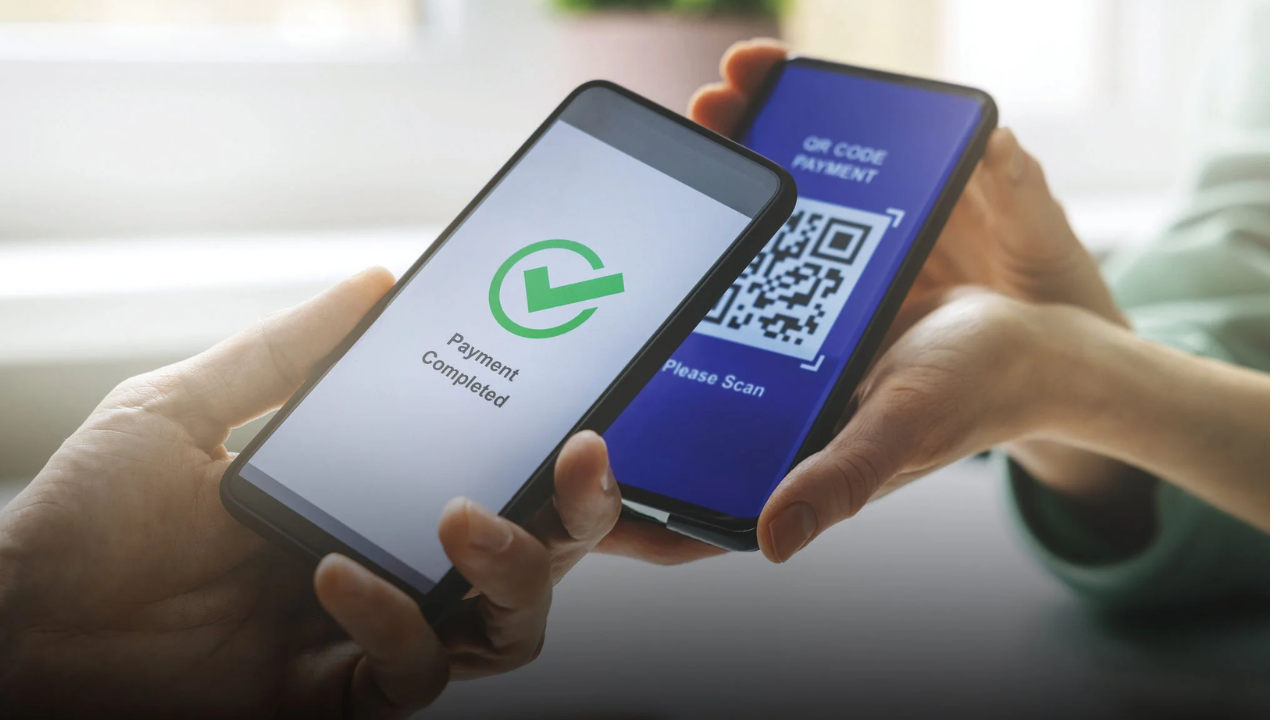
India’s digital payment ecosystem in 2026 is no longer just a story of convenience or adoption. It has become a deeply embedded financial infrastructure that shapes how money moves across the country every single second.
What began as a shift away from cash has now evolved into something far more advanced. Digital payments are no longer just transactional tools. They are intelligent, real-time systems powered by data, automation, and increasingly, artificial intelligence.
At the centre of this transformation stands the Unified Payments Interface, or UPI, which continues to define India’s retail payment landscape.
UPI: From Payment System to Financial Backbone
UPI has grown far beyond its original purpose of simple peer-to-peer transfers. In 2026, it functions as the backbone of India’s digital economy, handling everything from small street vendor payments to large merchant transactions.
What makes UPI significant is not just its scale, but its integration into everyday life. Payments are now instantaneous, frictionless, and deeply embedded into consumer behaviour. Whether it is buying groceries, paying utility bills, or transferring money to friends, UPI has become the default mode of transaction for millions.
A major evolution within this system is the emergence of credit-enabled UPI transactions. This allows users to access short-term credit directly within the payment flow, making digital payments not just a medium of exchange but also a financial flexibility tool.
In many ways, UPI has moved from being a payment platform to a financial ecosystem.
AI and the New Layer of Financial Security
As digital transactions increase, so does the complexity of fraud and financial risk. This is where artificial intelligence has become a critical part of the system.
In 2026, AI-driven security systems actively monitor transactions in real time, analyzing patterns, user behaviour, device activity, and transaction history to detect anomalies. If something appears unusual, such as an unexpected location change or abnormal spending pattern, the system can flag or block the transaction instantly.
This shift has fundamentally changed the nature of trust in digital payments. Instead of relying solely on static rules or manual checks, security is now dynamic and adaptive.
AI is not just preventing fraud after it happens. It is predicting and preventing it before it occurs.
For users, this translates into a smoother experience with fewer disruptions, while still maintaining a high level of protection.
Tokenization and Invisible Security
Alongside AI, another major development shaping digital payments is tokenization.
In simple terms, tokenization replaces sensitive card or account information with secure digital tokens. These tokens are used during transactions instead of actual financial details, making it significantly harder for data to be stolen or misused.
What makes this important is that it improves security without adding friction. Payments remain fast and seamless, but the underlying system becomes far more secure.
As a result, tap-and-pay transactions, online checkouts, and mobile payments have become both easier and safer.
Security, in this context, is no longer something users actively think about. It operates in the background.
Payments That Exist Inside Everyday Apps
One of the most noticeable shifts in 2026 is the rise of embedded finance.
Payments are no longer separate steps in a transaction journey. Instead, they are integrated directly into apps and platforms where the purchase happens.
Whether someone is booking a ride, ordering food, or shopping online, the payment process is now built into the experience itself. There is no need to switch apps or manually complete multiple steps.
This makes financial interactions feel invisible. Money moves in the background while users focus on the activity itself.
The result is a smoother, more intuitive digital experience where payments feel like a natural extension of daily actions rather than a separate process.
The Rise of SoftPOS and Merchant Transformation
On the merchant side, digital payments are also undergoing a major transformation.
SoftPOS technology is allowing smartphones to function as full payment terminals. This means small businesses no longer need expensive hardware to accept digital payments. A simple mobile device is enough to process transactions securely.
This has significant implications for small retailers, street vendors, and local businesses. It lowers the barrier to entry and expands digital payment acceptance into areas that were previously underserved.
Combined with UPI and mobile wallets, this is accelerating the shift toward a truly cash-light economy.
Mobile Wallets Still Matter
While UPI dominates transaction volume, mobile wallets continue to play an important role in the ecosystem.
They are widely used for small, frequent transactions and often offer additional features such as rewards, cashback, and stored-value convenience. In urban areas, especially, wallets remain popular for quick payments, transit usage, and daily purchases.
Rather than competing directly with UPI, wallets have adapted by focusing on specific use cases where speed and simplicity matter most.
Together, they form a layered digital payment system that serves different needs within the same ecosystem.
A System Built on Speed, Trust, and Intelligence
The defining characteristic of India’s digital payments landscape in 2026 is not just scale, but intelligence.
Payments are faster, but also smarter. Systems are more secure, but also more invisible. Transactions are more frequent, but also more seamlessly integrated into everyday life.
What was once a utility has now become an intelligent financial infrastructure that operates continuously in the background of the economy.
Beyond Cashless: Toward Frictionless Finance
India’s digital payment revolution is often described as a move toward a cashless economy. But that framing no longer feels complete.
The real transformation is toward frictionless finance, where payments are not just digital, but deeply integrated, automated, and intelligent.
In this system, money moves not just between people and businesses, but through networks that are constantly learning, adapting, and improving.
And in that sense, digital payments are no longer just about replacing cash.
They are about redefining how value moves in a connected economy.
COMMENTS